
Reasons to get rid of a stump
A stump at the edge of a wooded lot can be left to rot in peace. In a yard it tends to cause trouble:
- Mowing. Low stumps hide in tall fescue and wreck blades. Higher ones mean trimming around them every week.
- Sprouts. Hackberries, pears, box elders and several other common trees here keep sending up shoots from the stump and roots.
- Pests. Rotting wood draws termites and carpenter ants. Eastern subterranean termites are active across Tennessee, so a decaying stump next to the foundation is worth removing.
- Using the space. You can't lay sod, set a shed or plant a replacement tree on top of a stump.
- Selling. A cluster of stumps after a big removal looks unfinished to buyers.
What happens during grinding
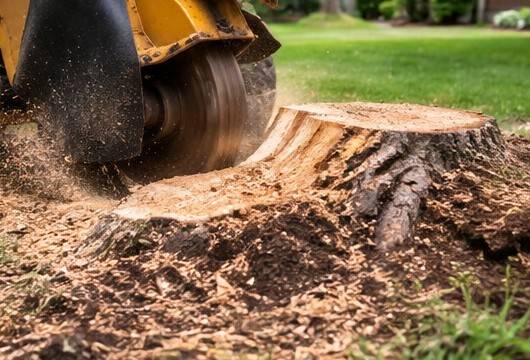
A stump grinder spins a heavy steel wheel fitted with carbide teeth. The operator swings it side to side across the stump, shaving off a little wood with each pass and working down below the soil line. The stump turns into a pile of chips mixed with dirt. Nothing is pulled out, so the lawn around the hole is barely disturbed compared with digging a stump out with a machine.
A normal visit looks like this:
- Sizing up the stump. Width at ground level, surface roots, and anything close by: a fence, a foundation, a walk, a buried downspout line.
- Marking buried lines. Gas, water, cable and electric lines can sit shallow, especially in older Columbia neighborhoods. Have public lines marked through Tennessee 811 before grinding.
- Grinding. Down to the agreed depth, plus the main surface roots near the stump if that's in the scope.
- Cleanup. Chips raked back into the hole and mounded, spread, or hauled off, as agreed.
Rock: the Maury County complication
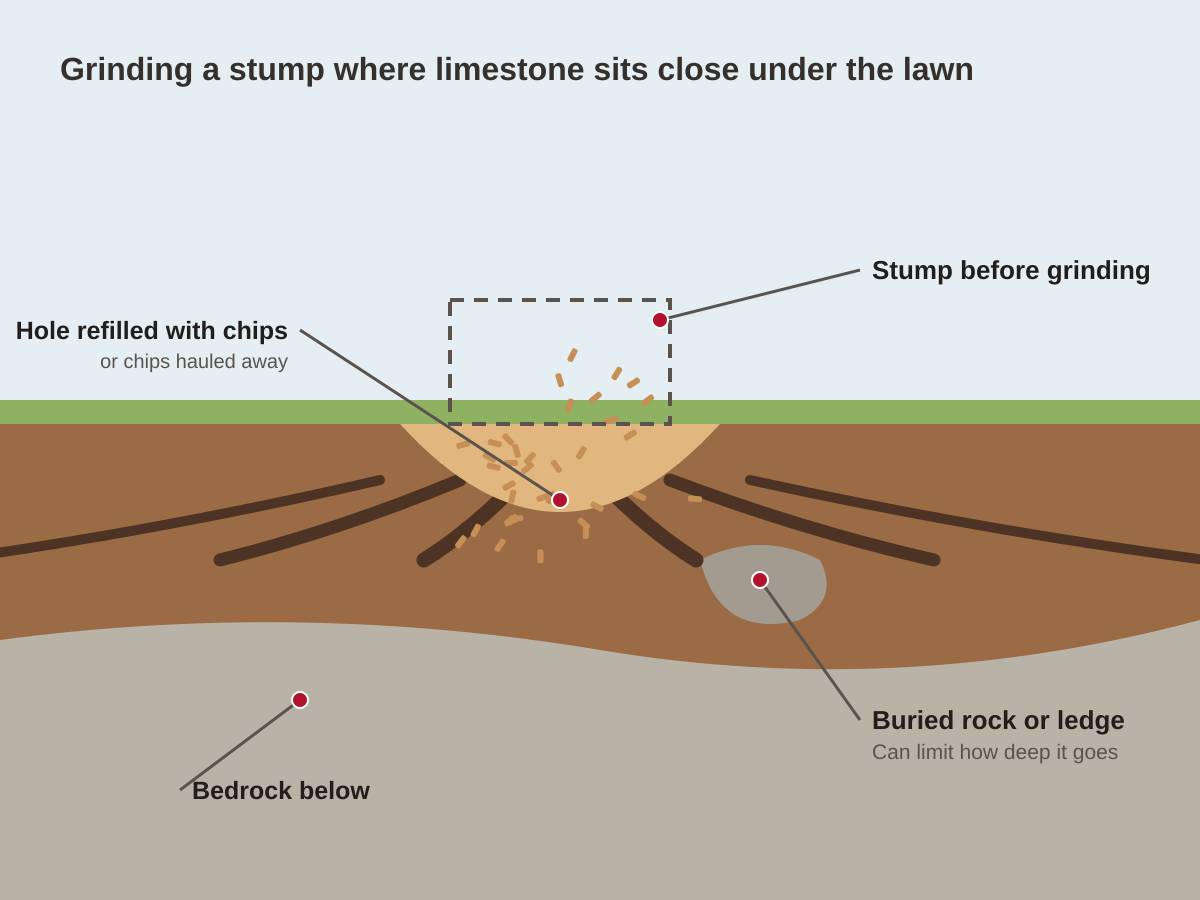
Much of the county sits on limestone, and in plenty of yards bedrock or loose rock lies only inches under the grass. Trees growing there wrap their roots around and between rocks, and the stumps they leave can hide stone inside the root mass.
What that means for you:
- The grinder may stop short of the depth you wanted when it meets rock. Ask up front how the pro handles it.
- Flying rock chips are a real risk, so a careful operator uses guards or plywood shields near windows, cars and siding.
- On very rocky spots, topsoil brought in and spread over the ground stump is often the practical finish for grass.
Different stumps, different jobs
Hackberry and elm
Common all over Columbia, with wide root flares and surface roots that run under the lawn. They grind reasonably well but sprout from the roots for a while afterward.
Oak and sugar maple
Big hardwood stumps from mature shade trees are dense and wide at the base, so they take longer and cost more per inch of diameter.
Cedar
Eastern red cedar stumps are usually smaller and don't resprout, but they are often in awkward spots along fences and in rocky ground.
Bradford pear
After a pear comes down, its roots can throw up thorny Callery sprouts. Grinding the stump and mowing the sprouts is the usual answer. The Bradford pear guide has more.
Old storm stumps
Stumps left from past storms may be half rotten and hidden under vines. Point out every one you want done.
Access and ground conditions
Grinders range from narrow walk-behind machines that fit through a garden gate to large tow-behind units. Measure your narrowest gate before you call. Spring Hill subdivisions often have fenced backyards with 4-foot gates, and older Columbia lots may have steps, retaining walls or steep banks to work around. After a long wet spell, heavy machines rut soft lawns, and a thoughtful pro will suggest waiting or laying down mats.
Grinding or full removal?
Grinding leaves the deeper roots to decay slowly underground, which does no harm under a lawn or garden bed. Full stump removal digs out the whole root ball with an excavator and leaves a large hole to backfill; it is usually only needed when something is being built on the exact spot. Chemical stump removers from the hardware store speed up rot but still take many months on a big stump. Burning a stump is slow and smoky, cities may not allow it, and outdoor burning during fire season needs a free Tennessee Division of Forestry permit.
What sets the price
- Diameter at ground level, measured across the widest point including the flare.
- How many stumps. Most of the cost is getting the machine there; each additional stump is usually cheaper.
- Surface roots you want ground too.
- Depth beyond standard lawn depth, and rock.
- Access: gates, slopes, soft ground.
- Chips: left, spread or hauled away.
See the Columbia tree removal cost guide for typical ranges, or call and we'll connect you with a pro for a free estimate.
Questions to ask before the grinder shows up
- How deep will you grind, and what happens if you hit rock?
- Do you grind the surface roots too, and for how many feet around the stump?
- Who requests the 811 locate, and what about private lines?
- Will the chips stay, be spread, or be hauled off?
- Will your machine fit through my gate?
- Do you carry liability coverage in case a stone breaks a window? Check any credential you rely on yourself.
Still need the tree itself taken down? Most pros will price the removal and the stump together; start with tree removal in Columbia, TN or, for a dead or failing tree, dead and hazard tree removal.